How Smart Farming Technology Is Transforming Modern Agriculture
Discover how smart farming technology is transforming modern agriculture through AI, drones, IoT sensors and data analytics to improve crop productivity and sustainable farming.
 meitanisyah
Introduction
Agriculture has always been the backbone of human civilization. However, in recent years, technology has started to play a major role in transforming the farming industry. With the rise of smart farming, farmers are now able to increase productivity, reduce waste, and manage their crops more efficiently than ever before.
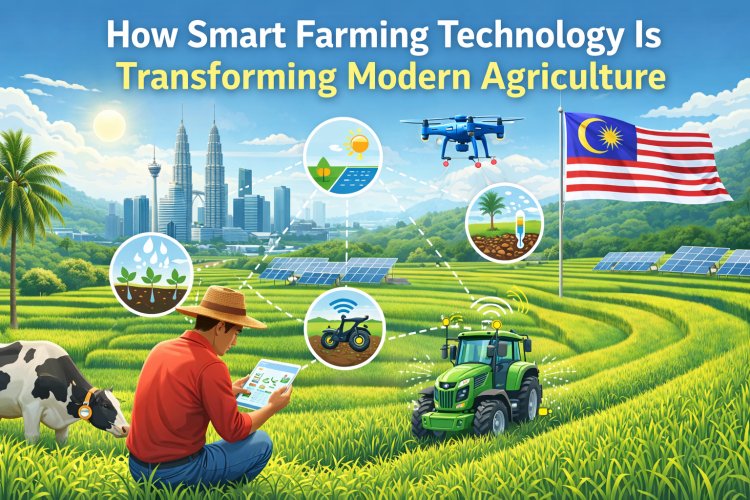
Smart farming combines modern technologies such as artificial intelligence (AI), Internet of Things (IoT), data analytics, and drones to improve agricultural practices. As the global population continues to grow, the demand for food production also increases, making technology-driven agriculture more important than ever.
What Is Smart Farming?
Smart farming refers to the use of advanced technologies to improve farming operations. These technologies help farmers monitor crops, soil conditions, weather patterns, and livestock in real time.
By using sensors, drones, and data analytics, farmers can make better decisions that lead to higher yields and more sustainable farming practices.
Some key technologies used in smart farming include:
- Internet of Things (IoT) sensors
- Artificial intelligence for crop monitoring
- Drone technology for field analysis
- GPS-based farm management systems
These tools allow farmers to optimize their resources while minimizing environmental impact.
Benefits of Smart Farming
1. Increased Crop Productivity
Smart farming technologies allow farmers to monitor crop conditions closely. Sensors placed in the soil can measure moisture levels, temperature, and nutrient levels, helping farmers determine exactly when to water or fertilize their crops.
This precision farming approach helps increase crop yield while reducing unnecessary resource usage.
2. Better Resource Management
Traditional farming often relies on guesswork when it comes to irrigation and fertilization. Smart farming removes this uncertainty by providing real-time data that helps farmers make accurate decisions.
For example, automated irrigation systems can deliver water only when crops actually need it, reducing water waste.
3. Reduced Environmental Impact
Sustainable farming practices are becoming increasingly important as climate change affects agricultural production.
Smart farming technologies help farmers use fewer chemicals and fertilizers by applying them only where needed. This reduces pollution and protects surrounding ecosystems.
4. Improved Farm Monitoring
Drones are becoming one of the most useful tools in modern agriculture. Farmers can use drones to monitor large areas of farmland quickly and identify problems such as pest infestations, plant diseases, or irrigation issues.
Early detection allows farmers to solve problems before they affect large portions of their crops.
The Role of Artificial Intelligence in Agriculture
Artificial intelligence is one of the most powerful technologies driving the future of agriculture. AI systems can analyze large amounts of data collected from farms and provide insights that help farmers make better decisions.
For example, AI can predict:
- Crop diseases
- Weather patterns
- Harvest timing
- Soil nutrient needs
These predictions allow farmers to plan their farming activities more effectively.
Challenges of Smart Farming
Despite its many benefits, smart farming still faces several challenges.
One major challenge is the cost of technology. Many small farmers may find it difficult to afford advanced farming equipment and digital systems.
Another challenge is the need for technical knowledge. Farmers need proper training to fully utilize smart farming technologies.
However, as technology becomes more affordable and accessible, these barriers are expected to decrease over time.
The Future of Agriculture
The future of agriculture will likely rely heavily on technology. Innovations such as robotics, AI-powered crop management systems, and automated machinery are already transforming farms around the world.
Smart farming not only helps farmers increase efficiency but also supports sustainable agriculture that can feed a growing global population.
As technology continues to evolve, agriculture will become smarter, more efficient, and more environmentally friendly.
Conclusion
Smart farming is revolutionizing modern agriculture by combining technology with traditional farming practices. By using tools such as IoT sensors, drones, and artificial intelligence, farmers can improve productivity while protecting natural resources.
As the world faces increasing food demands, smart farming will play a crucial role in ensuring a sustainable and efficient agricultural future.